Battles in Chronicles: Medieval - An In-Depth Look
.jpg)
A Closer Look at Battles
In our previous developer diaries, we've explored the politics and rivalries that drive conflicts in Chronicles: Medieval. This time, we're turning our attention to the battlefield.
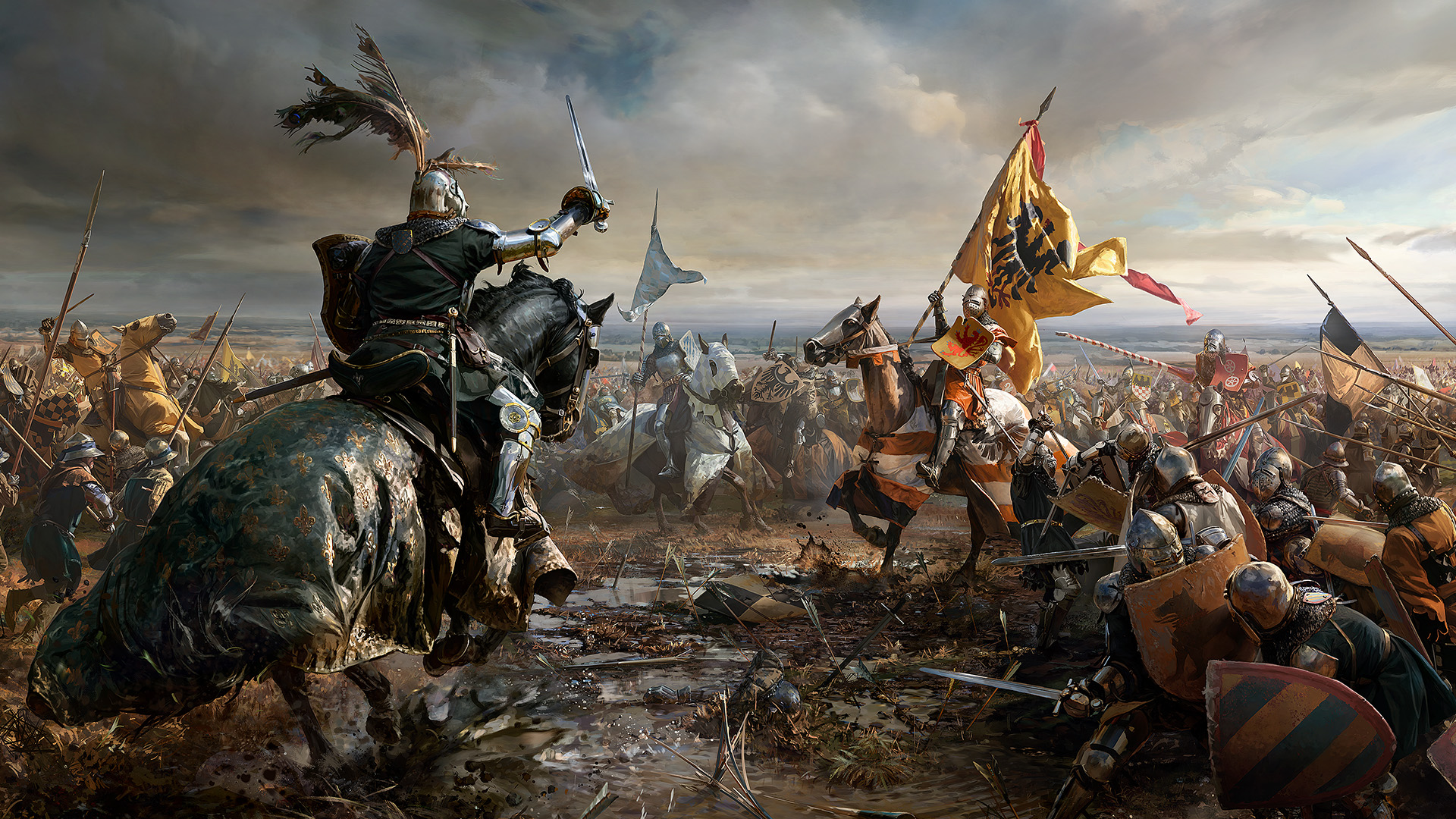
Before diving into Gareth's developer diary, join us for a closer look at our battles with some newly captured footage, and a more in-depth look by Gareth himself. It offers a glimpse of the scale, atmosphere, and warfare we're building. Plus, it has a nice little sneak-peak at the end.
As always, everything shown is still a work in progress, and yes, arrow trails will be optional. Players will be able to toggle them on or off as they please.
If you're unable to watch the video, or just like a little more details around battles, we've also put together a written piece by Steven and Gareth below. Enjoy!
Introduction
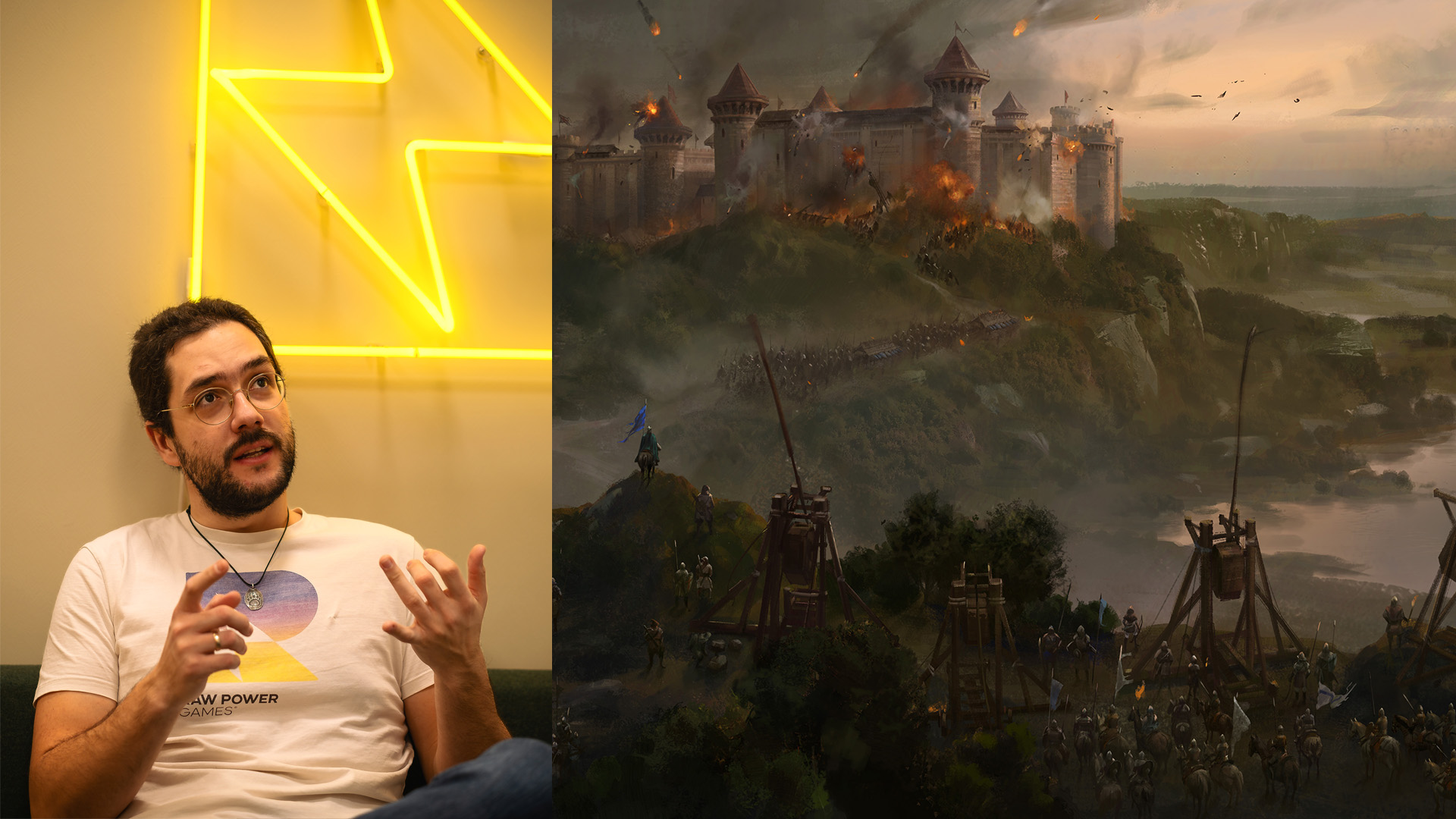
Hello again, and welcome back. Steve here, senior writer on Chronicles: Medieval. Before I hand you over to Gareth to walk you through how a battle in our game is actually fought, I thought I’d offer another small slice of history to set the scene.
In September 1342, an English force of perhaps three thousand men under William de Bohun, Earl of Northampton, found itself in Brittany with the entire French royal army marching to destroy it. Bohun had landed to support an English-backed claimant in the Breton civil war and was now badly outnumbered, deep in unfriendly country, with no realistic prospect of relief. The sensible thing to do was leave. He didn't.
He chose a field outside the town of Morlaix and anchored one flank against a wood. He dismounted his men-at-arms and stood them in a line with his archers on the wings. This was a tactical arrangement the English had been refining since Boroughbridge twenty years before, and which would, four years later, win Crécy. And then, on the night before the battle, he set his men to dig.
They dug pits in front of the line. Small, shallow, covered with sticks and grass. Nothing elaborate. By morning the ground in front of the English position looked, to any French scout, like unbroken meadow.
When the French cavalry came on the next day the first rank rode straight into the pits and went down in a tangle of horses and men. The second rank, unable to stop, piled into the first. The English archers shot into the mess at point-blank range. By the time the French had recovered, dismounted, and tried again on foot, half their momentum was already in the dirt.
The battle was not a famous victory. The French eventually disengaged rather than break, and Bohun, with his force largely intact but unable to follow up, retired into Morlaix itself and stood a siege. The chroniclers gave it a few sentences. It is fair to say that more spectacular battles like Crécy and Poitiers swallowed the memory of it whole.
But Morlaix is the more interesting battle. A smaller army on chosen ground, an outnumbered commander who declined the sensible option, and an outcome decided the night before, by men with spades, in the dark. It appeals to the writer in me. The period gave us so many of these battles between men whose names we've forgotten, deciding the futures of villages that no longer exist.
This is the texture Gareth and his team have set out to capture. Not the diorama of the great battle, but the practice of medieval war: the planning, the reading of ground, the moment of commitment, and the long quiet hours beforehand when somebody, somewhere, is doing the unglamorous work of deciding it. Over to him.
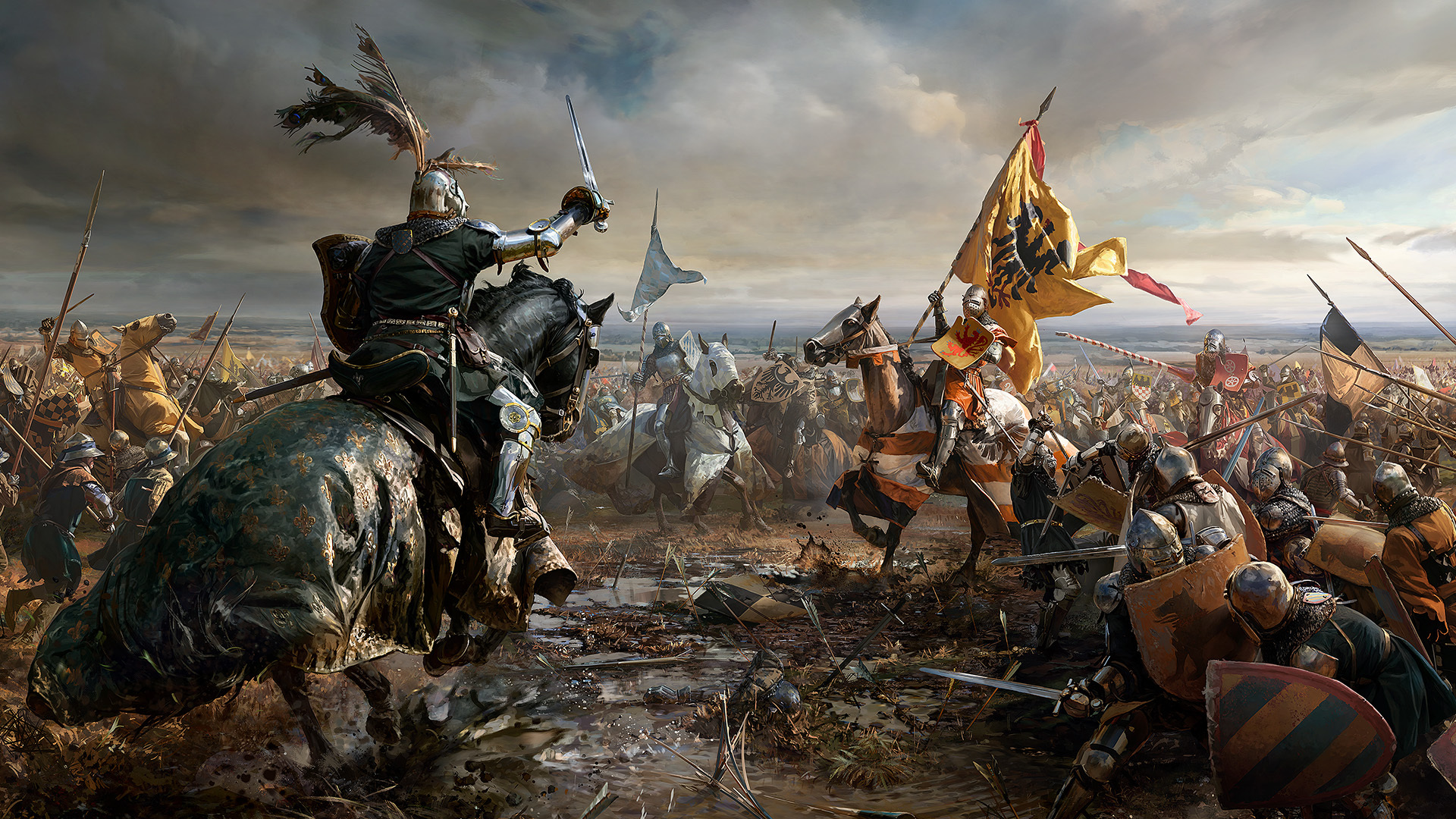
Into the Fray, Battles in Chronicles: Medieval
Welcome back to our third Developer Diary for Chronicles: Medieval. I'm Gareth James Bourn, a Senior Designer at Raw Power responsible for Battles and what we call Playable Instances, third-person maps of every kind, and I'll be your guide through what my teams and I have been making together. In our last entry, Alvaro and Steve walked you through the systems of lordship, loyalty and war that shape the political landscape of the game. Today, we're picking up where those wars are decided: on the field of battle itself. This is where the alliances you have built, the vassals you have cultivated and the rivals you have made come to settle their accounts in iron and blood.
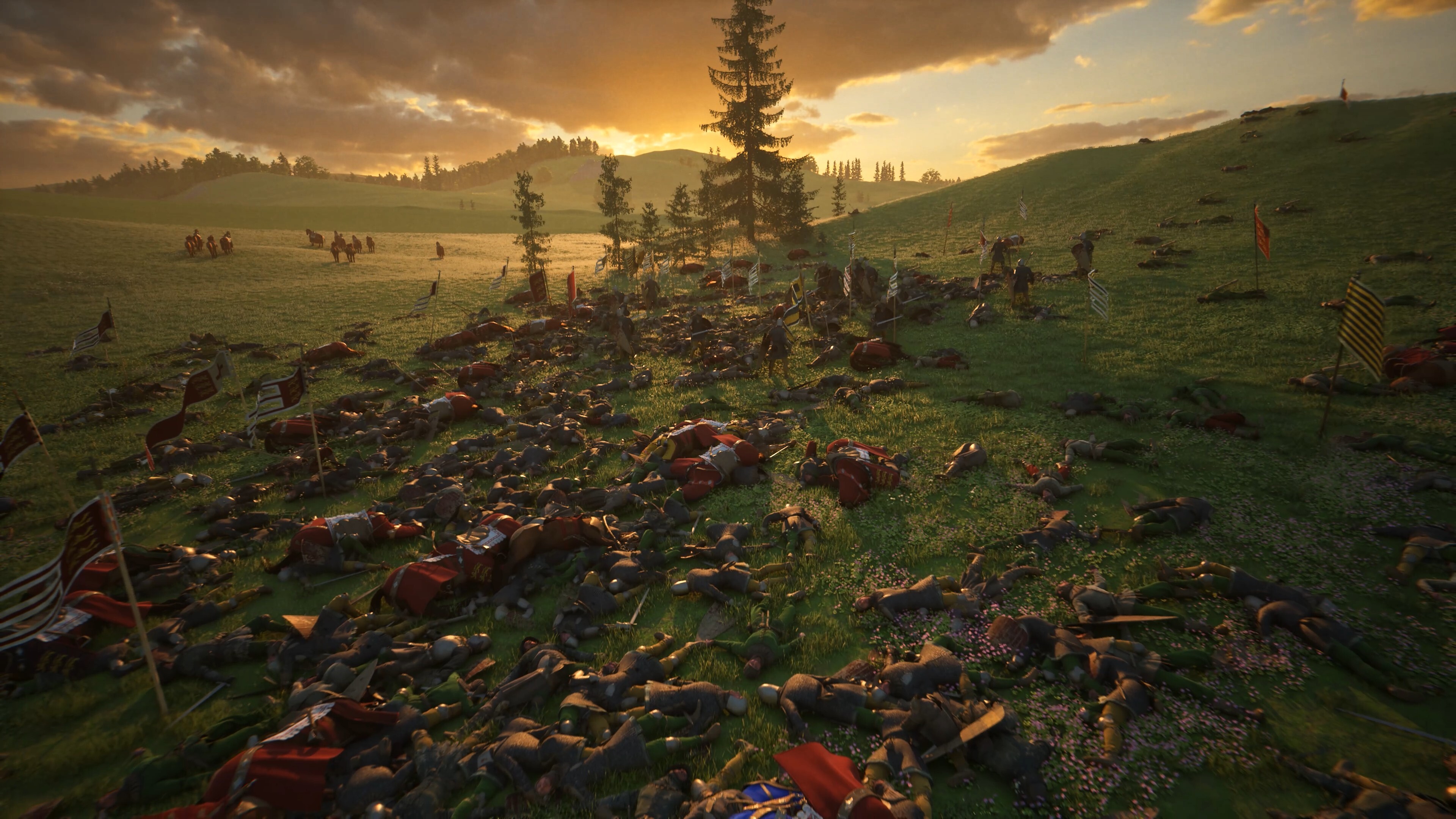
This time we'll be looking at how a battle actually unfolds, from the moment two armies meet on the map to the last man standing over a ruined meadow churned into mud and littered with bodies. We'll cover how battlefields come into being, how you'll prepare your forces, the orders at your disposal as a commander, and what it means to lead from the front when steel meets steel.
As ever, please note that the systems described here form a core part of the Chronicles: Medieval experience, but their scope and values are still in active development, and subject to change and rebalancing.
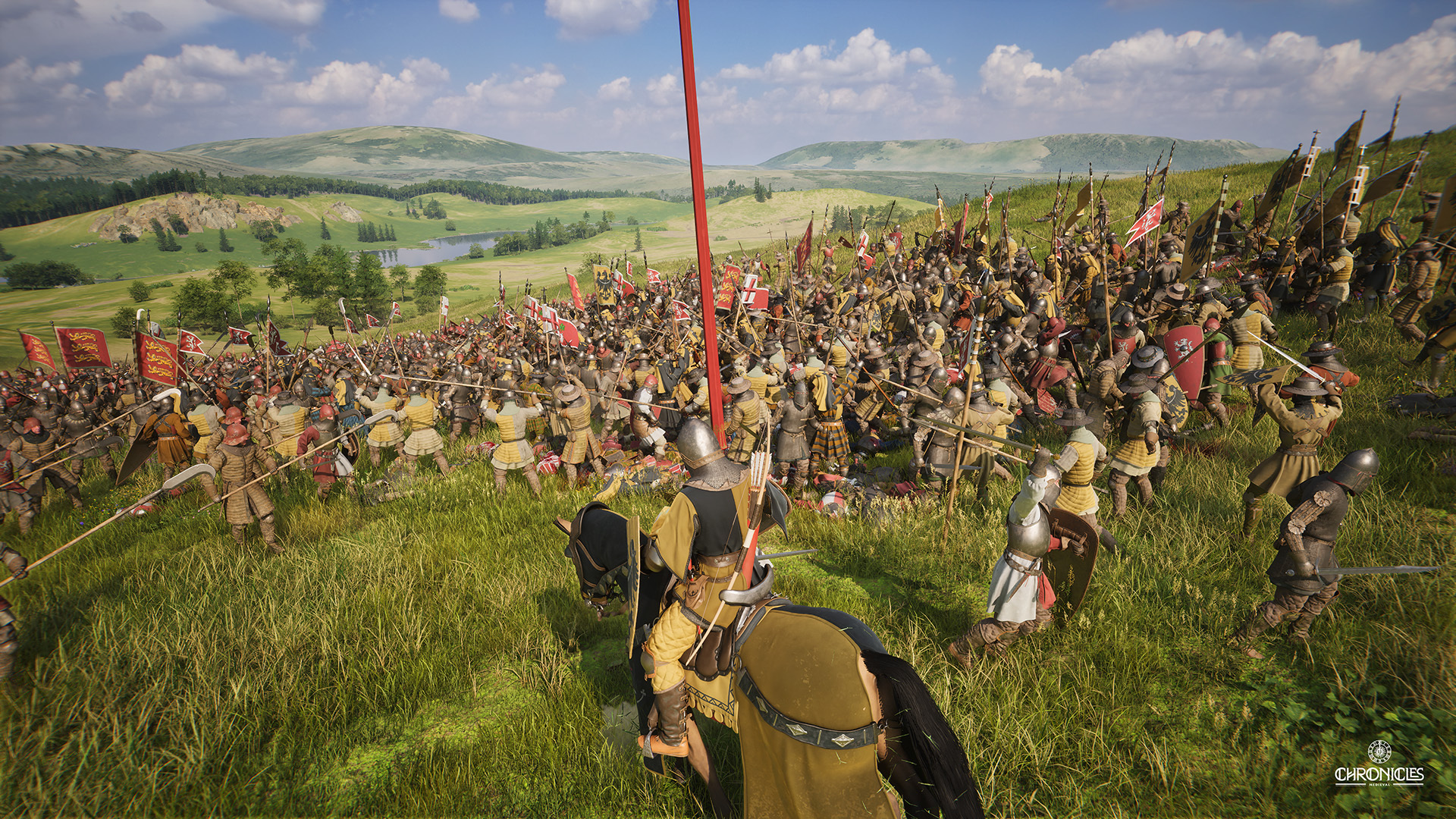
The Scale of Battle
The battles of the Hundred Years War were not all great clashes of the utmost importance. For every Crécy or Bannockburn, there were a hundred smaller affairs: a baron's retinue putting down a tax revolt, two rival knights settling a border dispute with a few dozen men each, a raiding party caught between a village and a forest. The medieval battlefield was a place where a dozen men could matter as much as a thousand, depending on who they were and what was at stake.
We seek to honour that range. Battles in Chronicles: Medieval run the full spectrum, from small bands skirmishing over scraps of land to enormous clashes that can decide the fate of kingdoms. Our AI and our maps need to handle it all. In a small fight, every man counts. A single sergeant flanking a hedge can decide the outcome; the loss of three archers might be the difference between holding the wood line and giving it up. The pace is intimate and the margins are thin. In a great clash, the calculus changes entirely. Whole armies hurl themselves into one another, a single order ripples across hundreds of men, and the moment a vanguard wavers can pull a thousand more with it.
Our ambition is 1,000 versus 1,000, and we are working toward it. We are not yet ready to commit to that number, because getting there honestly means solving a complex set of problems across visuals, AI responsiveness, and everything in between, and that work is still ongoing across our supported hardware range. We would rather be open than hand you a number we cannot stand behind. If we do not reach it by Early Access, we keep going. A consistent, solid experience will always take priority over a headline figure.
Both kinds of fight live inside our game, and we're building toward the emergent moments that only happen when they do: the lone unit holding a sunken lane against a settlement raiding party, the wedge of cavalry that splits an army of hundreds, or the flank that breaks because you saw an opening and you took it.
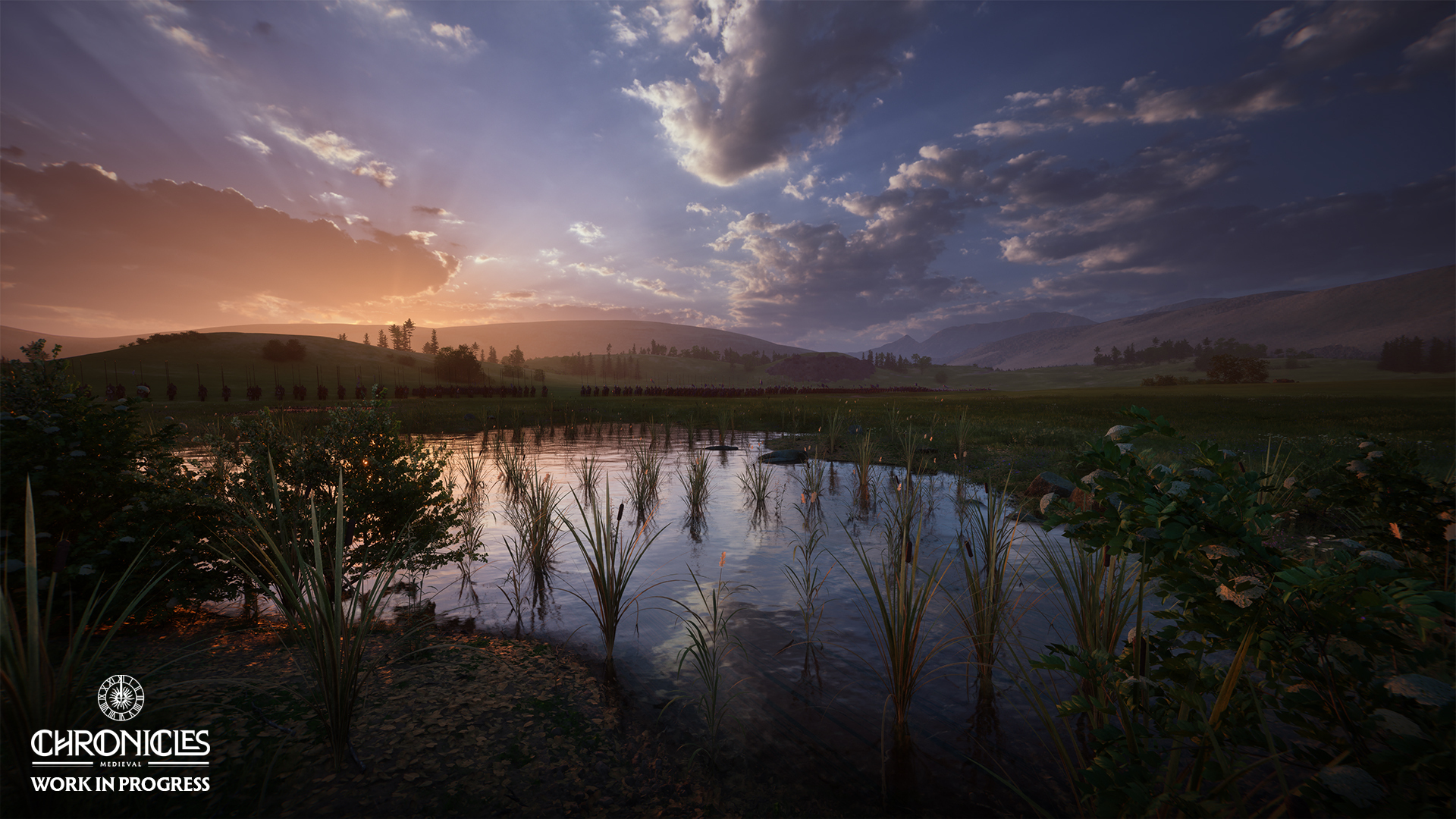
A Field for Every Fight
Let's start where every good story does, at the beginning. When you choose to engage an enemy force, the game looks at where you are on the exploration map and loads a battlefield to match. You could be in the rolling hills of Burgundy facing down a handful of brigands, or staring across a muddy field at the King of England himself, and in both cases the battle arena will be scaled and shaped to suit the ensuing battle. It's a big part of what makes Chronicles: Medieval feel like a proper sandbox: the world decides the terrain, the armies decide the stakes, and you decide how to shape it.
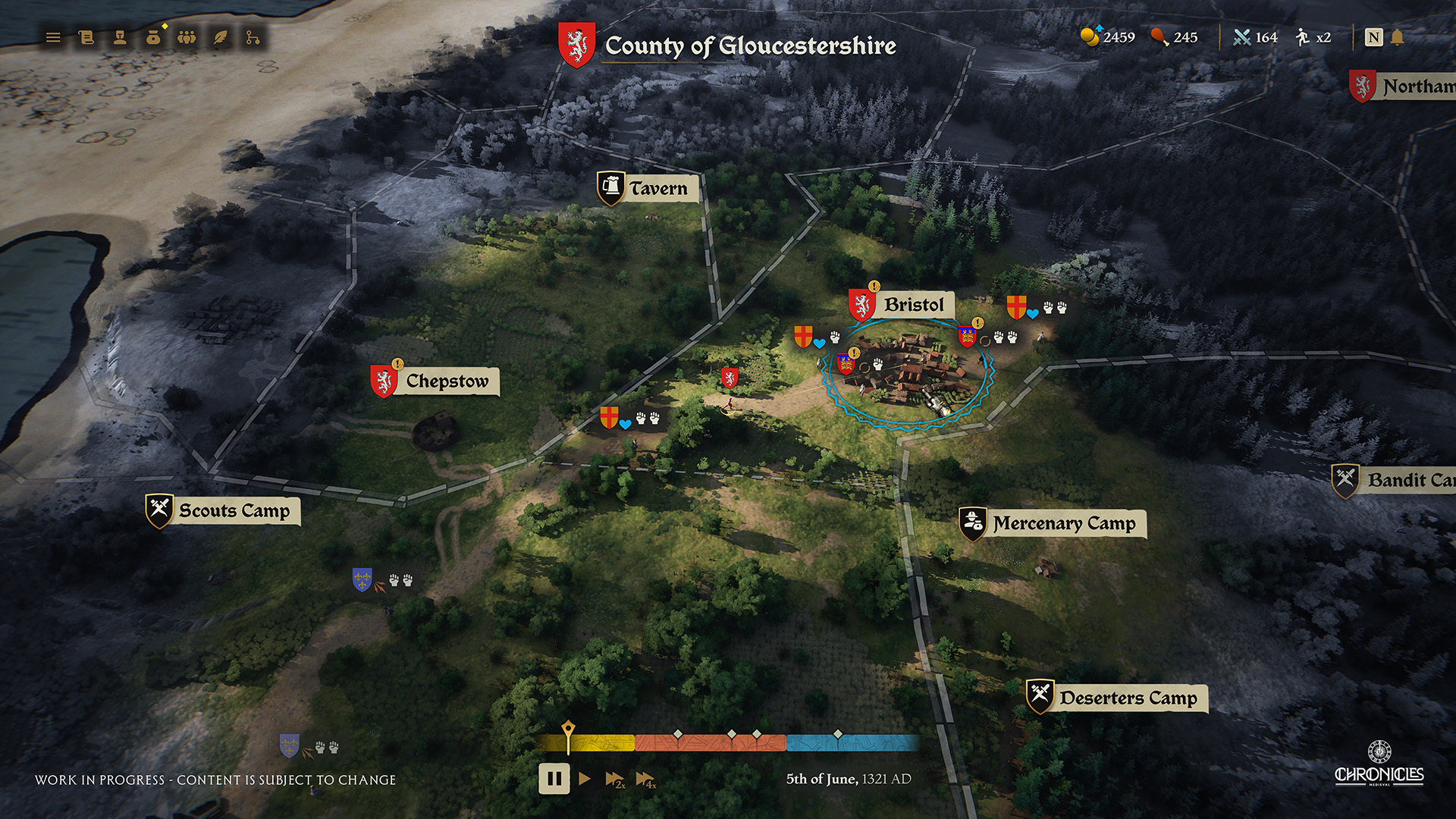
This matters to me. What makes a compelling space for a twenty-versus-twenty scrap is barely a blip in the eye of a commander staring down hundreds of men with his own. Every battlefield has to hold up at any scale, and that shapes how we build them from the ground up to be meaningful every time.
How Battlefields Come to Life
Each battlefield in Chronicles: Medieval is procedurally generated by our developers using our in-house tool, Ymir. Importantly, this generation happens during development, moulded by us, not while you're playing, so loading into a battle remains fast and smooth.
What Ymir unlocks is variety. A huge number of distinct battlefields can be produced with relatively few clicks, which means we can ship a generous helping of them and ensure that fighting in the marshes of Flanders feels meaningfully different from fighting in the Welsh uplands or the open fields of Champagne.
Like all of our tools; Ymir won't be staying locked away in our studio, either. We're committed to putting it in the hands of the modding community once we reach version 1.0, so that anyone who wants to craft their own corner of the medieval world can do so with the same tools we use. Chronicles: Medieval is, at its heart, a game built by people who love history and love the games other people make from history, and that goes both ways. Modding and historical curiosity aren't bolt-ons here; they're woven through how we work, they’re cemented in our game design pillars.
If you want to one day recreate the field of Poitiers, build out a fictional duchy on the edge of the Empire or rebuild a battlefield to match an account you read in a chronicle, the tools that ship our maps and shape our battles will ship yours.
.gif)
Battle Planning
This is where the story of a battle begins. Before a single arrow flies or a single horn sounds, plans are laid on the grass and in the dirt, ready to unfold with the precision of a well-drilled retinue, or unravel the moment they meet the enemy.
Most battles in Chronicles: Medieval open here, during Battle Planning: you stand inside your “deployment zone” with your army arrayed before you, the enemy doing the same across the field. This is where tactics are brewed, intentions set and the first page of the chronicle is written.
Our smaller, more direct fights skip this step entirely. When you've only a handful of men at your back, there's little to plan and less time to plan it. We'll dig into those another day.
Battle Planning is built around three layers: Battle Lines, Standing Orders and Initial Orders. Together, they let you shape your army's posture and intent before the fighting begins.
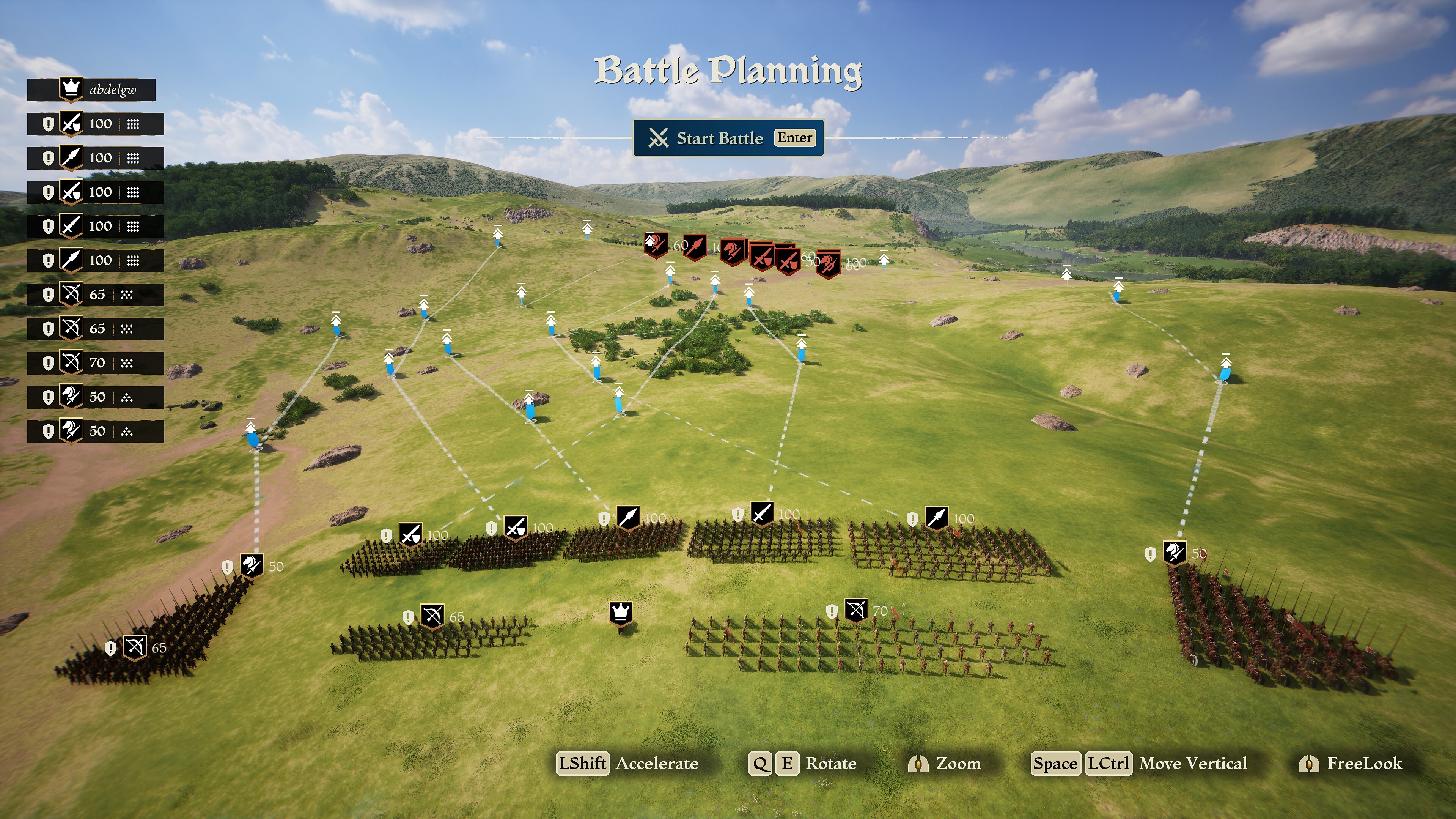
Battle Lines
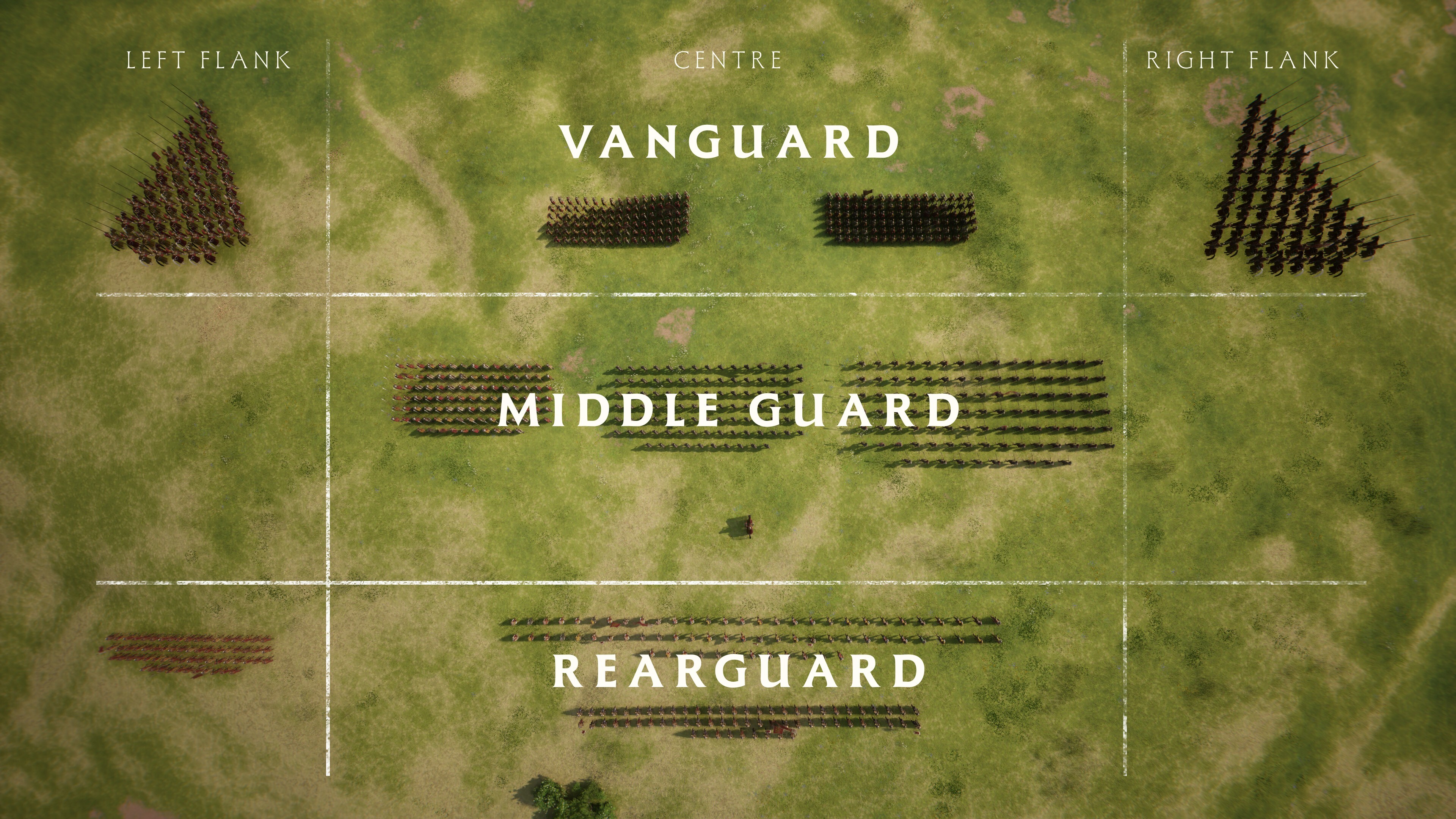
Your army takes the field with shape and intention, not as a faceless mass. It deploys into battle lines, the broad zones that make up an army's shape on the field: the Vanguard at the front, the Middle Guard in the centre, the Rearguard behind and the Flanks on either side.
There is no single prescribed shape every army must conform to. Instead, each unit has its own preferences based on its type and the culture it belongs to, the deployment system reads those preferences to place each unit where it fits best. French heavy cavalry, true to their reputation, gravitate to the Vanguard, eager to lead the charge. English longbowmen prefer the Flanks, where they have clear lines of sight and room to bring their longbows to bear. The forces of the Holy Roman Empire favour a dense Vanguard and Middle Guard, presenting a wall of well drilled armoured men to break against. Each culture brings its own habits to the field, and the deployment system honours them.
The sum of these placements becomes your battle lines, scaling to any size of army and giving each culture a distinct identity on the field. You can shimmy your lines around during deployment to react to whatever the enemy has brought to the dance. Arrange your men as you see fit. Customisation at any time, where you set the defaults from your “army management” screen, is something we're aiming to bring in after Early Access.
Standing Orders
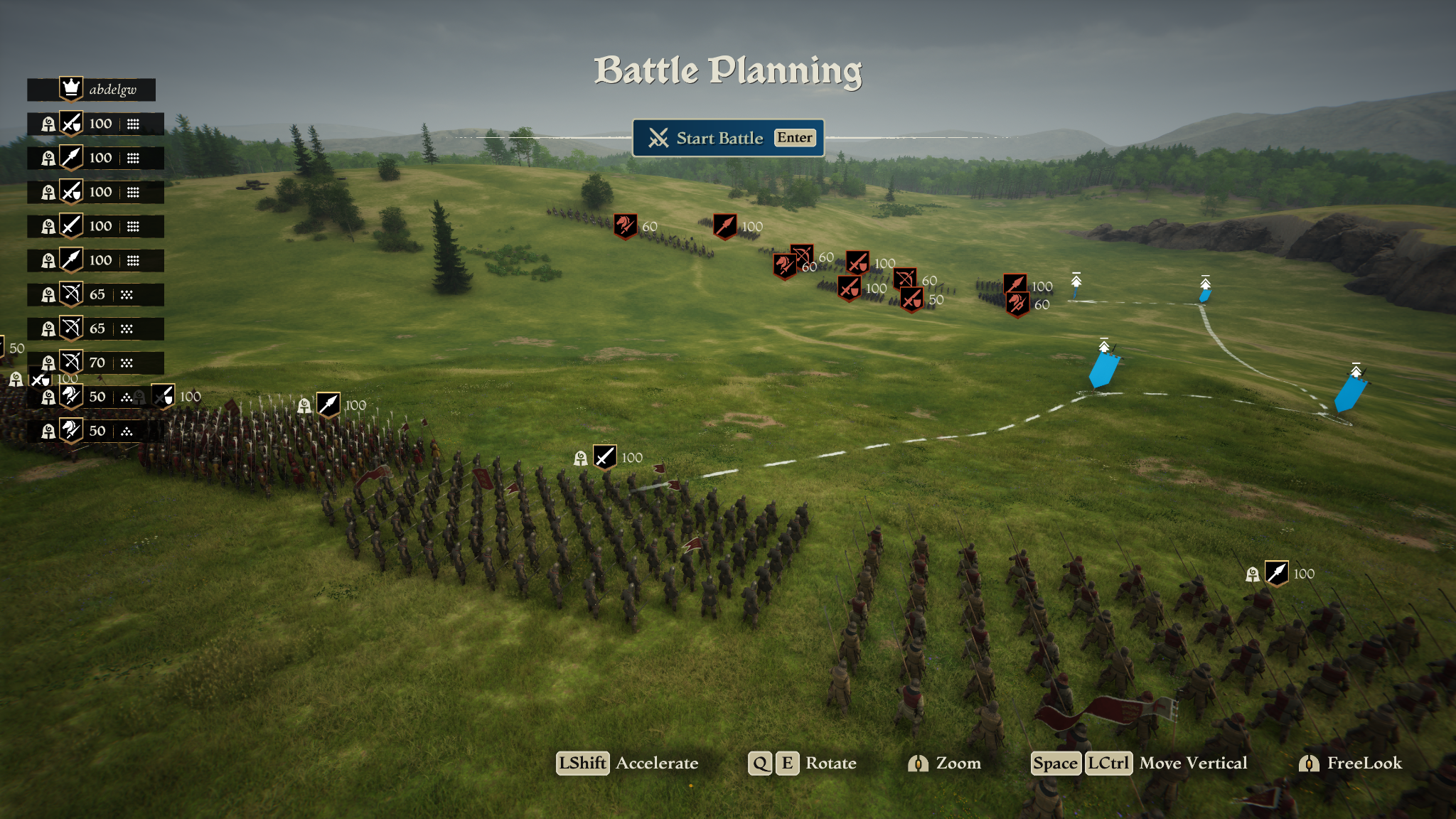
Once your army is laid out, you'll assign Standing Orders. These are the pre-established instructions that stay in force until you change them: the rule book your units fight by. If you've ever heard the term "standard operating procedure", that's exactly the spirit of it. Standing Orders tell each unit how to behave without waiting for fresh commands from you.
There are three to choose from:
Aggressive. The unit seeks out enemies and tries to kill them. If something moves within range, they can see it, and it isn't friendly, the unit goes for it.
Defensive. The unit holds its ground and waits for the enemy to come to it. If you order a Defensive unit to reposition, it will move, but the moment it spots an enemy it will stop and hold the line.
Versatile. This is where things get interesting. A Versatile unit is essentially being told to use its judgement. A cavalry unit set to Versatile which finds itself charging into a shield wall might switch to a Wedge formation on its own to try to punch through. Versatile units read the situation and respond, within reason, the way a competent captain would.
Initial Orders
Finally, Battle Planning is also where you can issue your Initial Orders. These are commands that define what a unit will do the moment the battle begins. By selecting a unit and right clicking terrain outside of your deployment zone you can send your cavalry sweeping around the right flank. Order your longbowmen to advance on a particular ridge. Have your spearmen move to a hilltop and hold.
Once an Initial Order is completed, the unit is released to behave according to its Standing Order. So if you've ordered your cavalry to charge a particular enemy flank, they'll execute the charge, and from then on they'll behave according to their Standing Order.
Formations
The last piece of the deployment puzzle is formations, the actual shape each unit takes on the field. We've split these into two tiers.
Base Formations are the resting states that core units fall into by default. There are three: Line, the wide and mobile infantry shape that most fights begin in; Block, which is tighter and deeper, with a narrower front and more staying power; and Loose, designed for ranged units, dispersing them so that incoming arrows have less to hit and charging cavalry has less to crash into. None of these formations will win you a slugging match against a committed combat formation. They're connective tissue, useful for moving, manoeuvring and waiting for the right moment to commit.
Advanced Formations are where the system shows its teeth. These are the specialist shapes, brutally good at one job and meaningfully bad at most others. The Shield Wall locks infantry together to hold ground against attack. The Spear Wall is a bristling hedge of polearms designed to delete charging cavalry. The Square is unflankable, a defensive bulwark that can face threats from any direction. The Skein is the proper shock-cavalry formation, built for a devastating charge. The Wedge, for infantry or cavalry, is built to punch a hole through an enemy line.
Each of these comes with real costs. Spear Walls can barely walk. Squares can't maneuver to save their lives. Skeins give you one magnificent charge before they need to reform. Advanced Formations are entered either at your direct order or by a Versatile unit that decides the moment calls for it.
Timing matters as much as choice. You'll often want to move in a flexible Base Formation and commit to an Advanced one only when contact is imminent. Because reformation takes time, and that time varies between formations, changing your mind has a cost. The system rewards reading the field rather than constantly fiddling with every unit on it.
The Battle Itself
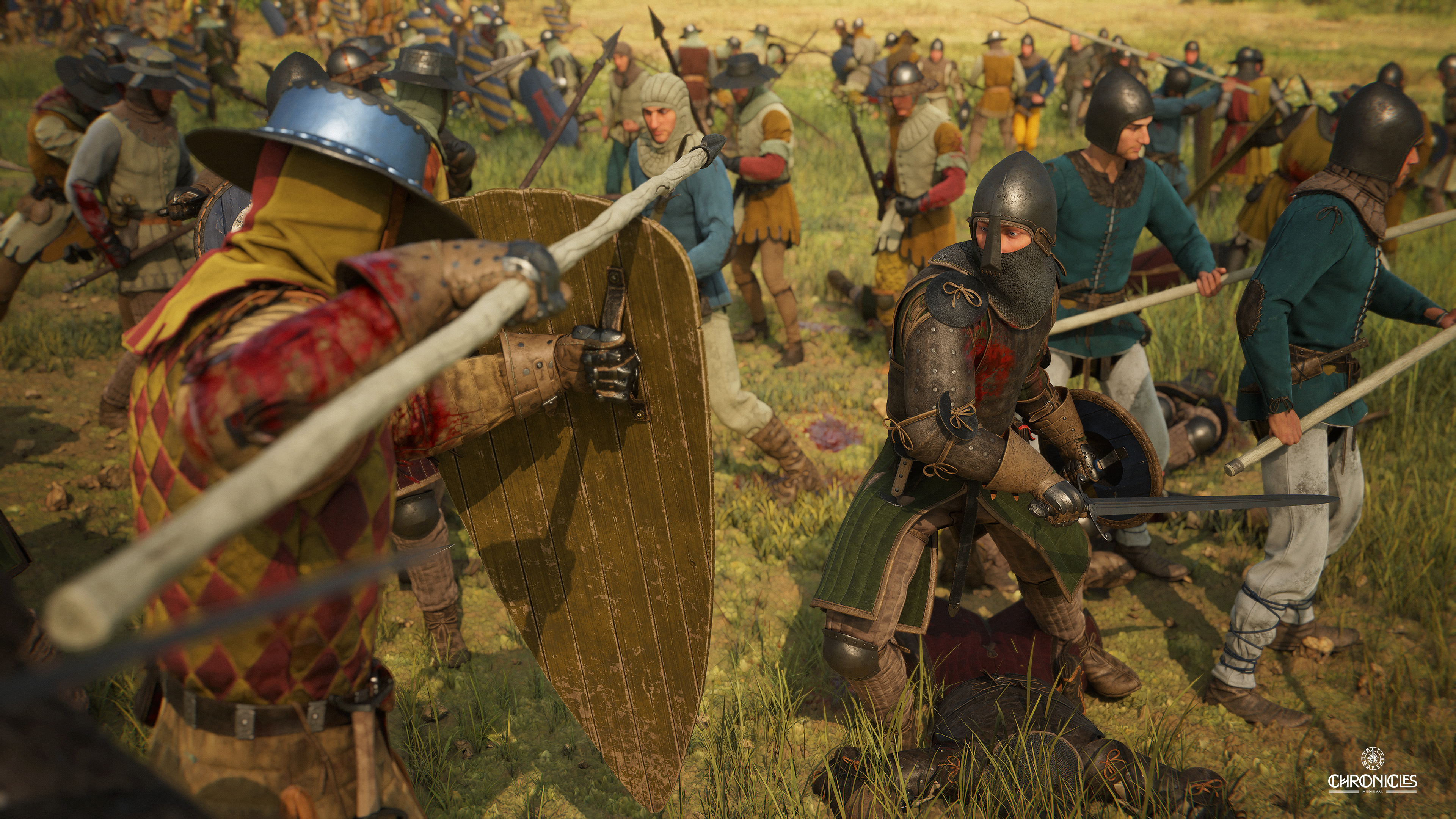
The horns sound, and the plans you laid in the dirt are plans no longer. When you commit to the fight, your Initial Orders fire, units rely on their Standing Orders, and the Battle Phase begins. From here, the game becomes about reading the fight: spotting the moment a flank bends, noticing when a Standing Order has stopped making sense, finding the gap in the enemy line that wasn't there a minute ago. Wrangling the chaos of war.
You are the commander, and you have two ways of being in this fight.
Boots (and Hooves) on the Ground vs Command Mode
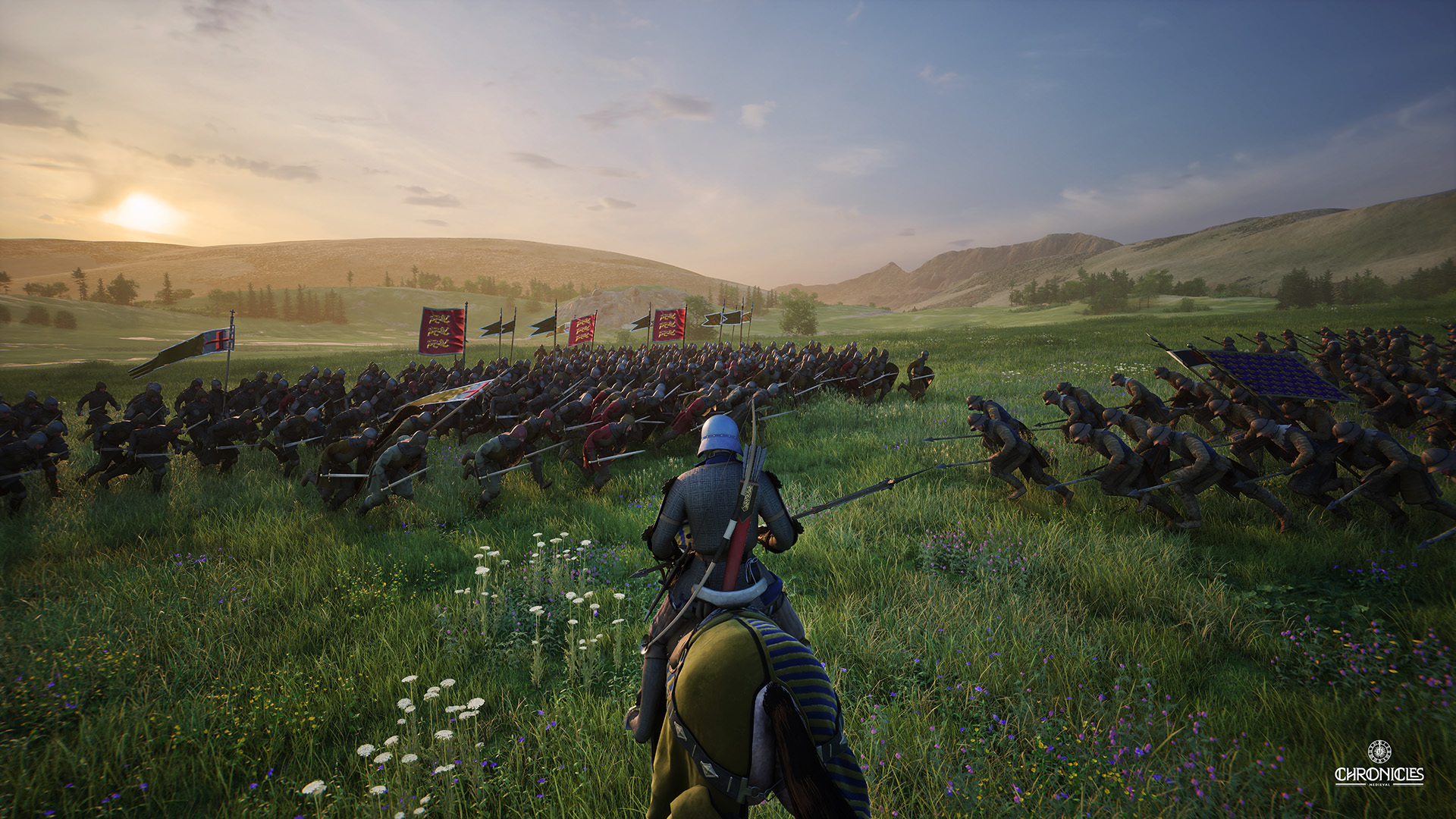
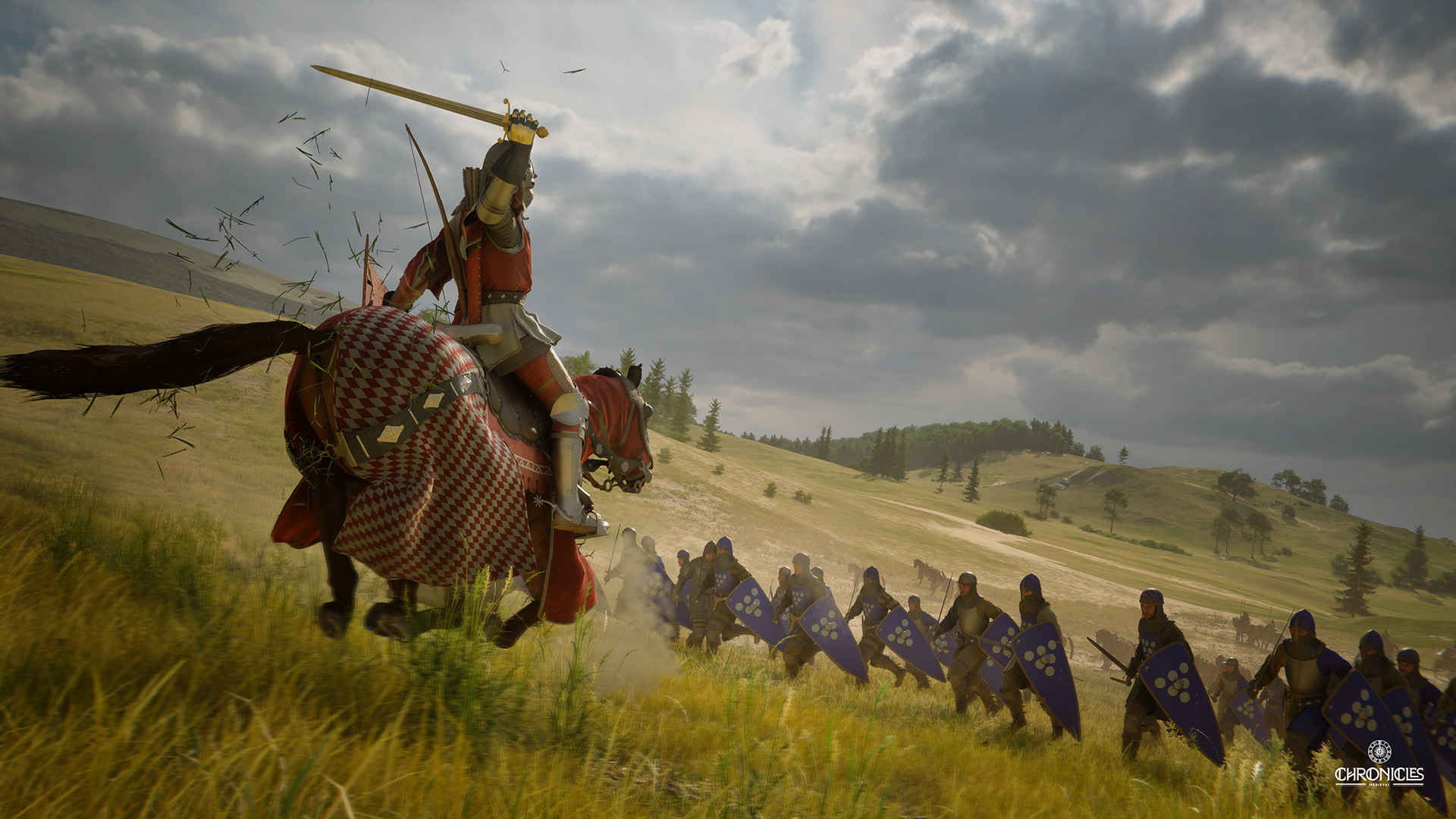
Getting stuck in has many benefits, you are a man in the line, swinging steel alongside your troops, surrounded by the noise and danger of melee either on foot or on horseback. Your character is one warrior among many, gaining in experience and skill with all the risk and reward that brings.
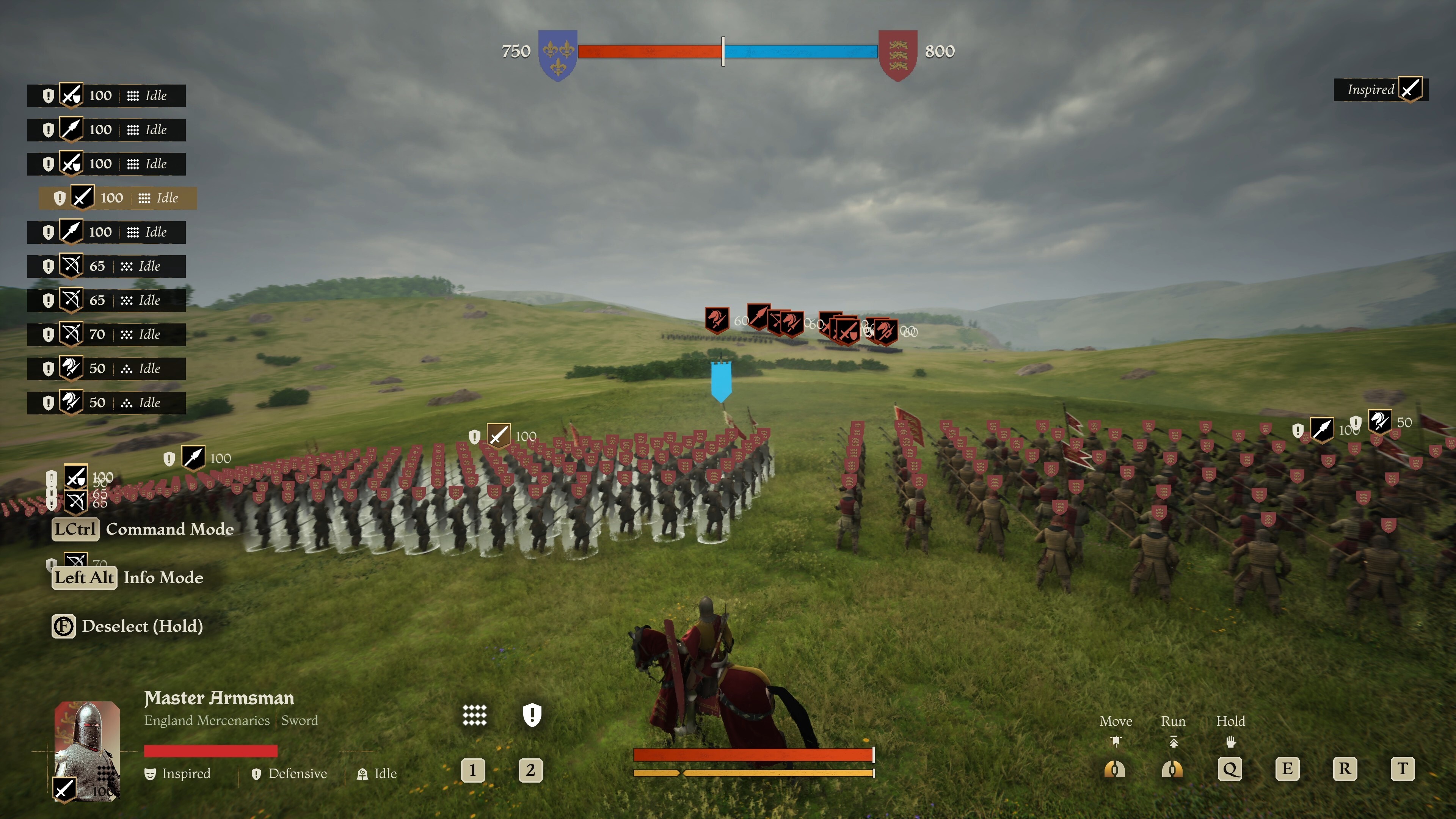
Command Mode is when you step back to direct the army. With a quick press of left control the camera pedestals up to frame your character on the field during a moment of slowed time, time dilation, and you're directing forces rather than fighting personally. The world doesn't stop, but it slows enough to let you think.
You move between the two whenever you like. Wade in to break a flank yourself, then pull back to redirect your reserves. Hold the centre with your retinue, then call for a general charge when the enemy commits. Lord, commander, killer — whichever the moment demands is yours to be.
Giving Orders
In Command Mode, you have two flavours of order to work with.
Global Commands are army-wide statements of intent. No specific unit is selected; you're making the big call for the whole force. Your options include Advance, Hold, Fallback, Engage, Charge and Retreat. These orders go out as horn calls across the field, and the AI works out how each unit best carries them out given where it is and what it's facing. You're shaping the battle here, not micromanaging it.
Local Commands are precise and specific. You select a particular unit and take direct control: move it here, send it at that target, change its facing, switch its Standing Order on the fly. A Command Banner appears under your cursor showing exactly where the order will resolve, so there's no ambiguity about what you're asking for.
Morale: The Heart of the Fight
Underpinning all of this is morale. Medieval battles were very rarely decided by the literal annihilation of one army by another. They were decided when one side decided it had had enough and broke.
Every unit in Chronicles: Medieval has its own morale value, moving through five states. Inspired sits at the top, where a unit fights above its baseline. Below that is Confident, the normal fighting state. Then Concerned, the first warning light, followed by Wavering, the second; here you have a window to act before things go wrong. At the bottom is Broken, which triggers a rout. The unit turns and flees and is counted as lost regardless of how many men actually survive. The mangy deserters.
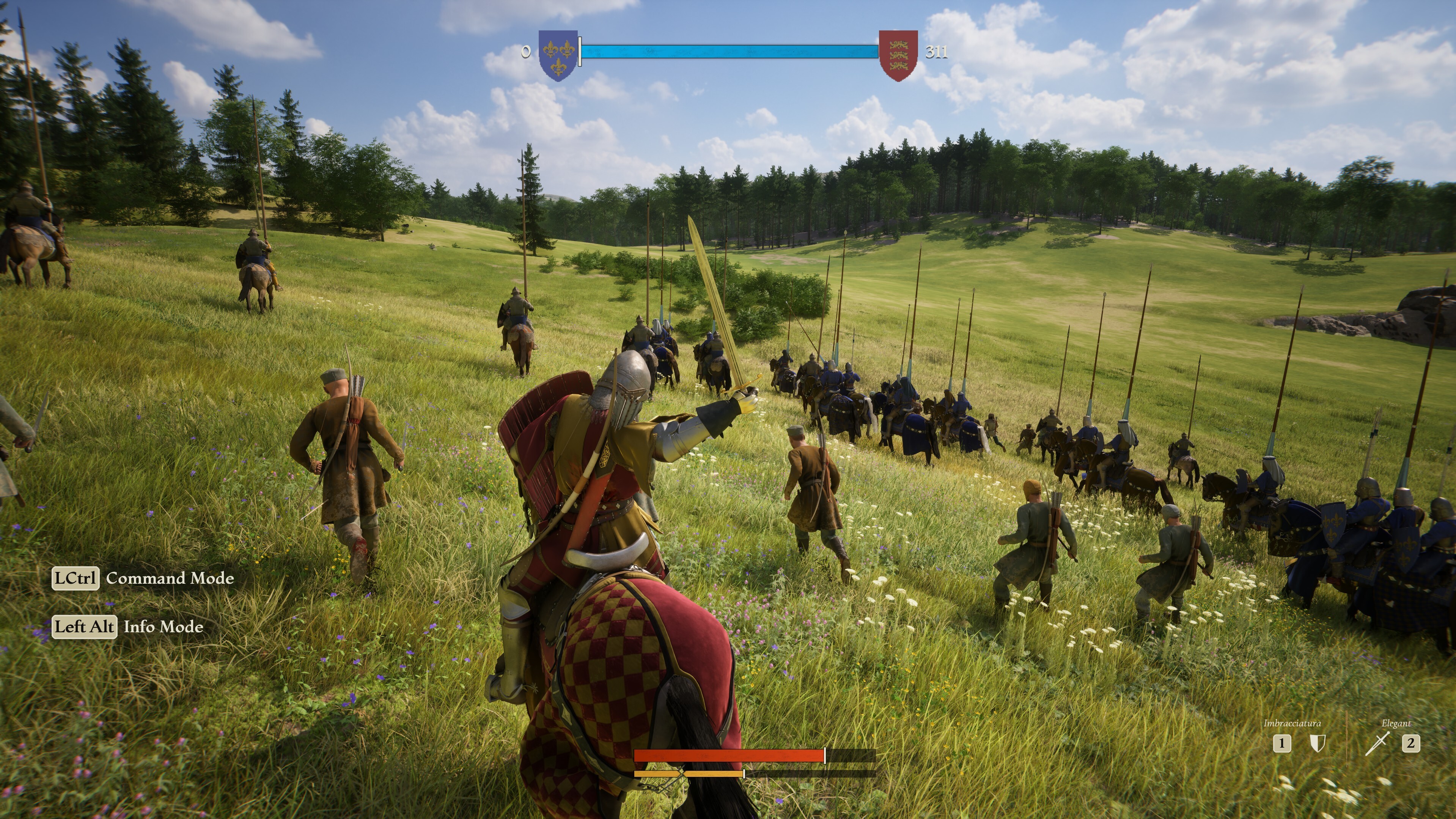
Two units fighting side by side can be in completely different morale states. Taking casualties drags morale down. Being charged, especially in the flank, drags it down. Watching a friendly unit break nearby drags it down. The single biggest morale hit, however, is your character going down: a one-time penalty applied across your entire army when their leader falls.
That risk is the very reason why being a pair of boots on the ground, participating, earns its keep. You are the heart of your army, and they take their courage from you. Stand among your men and they fight harder. Cut a knight from his saddle in front of them, drive your lance through a man's chest in clear view, and the men around you remember why they followed you here. Those moments, the kills you make with your own hands, the executions delivered where every soldier can see, are the only way to lift a unit into the Inspired state. No Standing Order will do it. No horn call will do it. Only you can, and only by being the kind of lord men want to die for. Sometimes a friendly unit on the brink of Wavering just needs to see their lord cut down a man in front of them in spectacularly brutal fashion, and the line holds.
Rout and Retreat
It's worth drawing a clear line between two words that sound similar but mean very different things.
Rout is what happens when a unit breaks. Morale gives way before bodies do, the unit turns, and the men flee. That unit is lost. Currently it will not be possible to reform it mid-battle.
Retreat, by contrast, is an ordered withdrawal. You can call it deliberately, and the game will call it automatically if your army's overall strength falls below a certain threshold. Retreating units stay with your army and can fight another day.
When that threshold is reached, a Defeat or Victory screen appears, but the battle does not simply end. You retain control. You can cover the withdrawal of your shattered forces, ride down the routers of a beaten enemy or call the whole thing off and ride home. The decision, like so many in Chronicles: Medieval, is yours.
One battle. One outcome. The next one is already waiting for you somewhere on the map. That's Chronicles: Medieval on the battlefield. Armies that fight like the cultures they came from. Units that know their job and you, a commander who can shape the fight from the back or settle it from the front. Or both.
Closing Thoughts
The battles of the fourteenth century were chaotic, personal, and rarely decided by the bigger army on paper. They were decided by who showed up, who held their nerve, and who chose the right hill on the right morning. That is the kind of battles we have set out to build, where preparation matters, where the moment of contact is yours to read, and where a single decision made at the right second can rewrite an afternoon.
Think of the stories the period gave us. A landless knight with a small retinue, fighting on the right ground with the right plan, breaking a force several times their size. A complacent lord with a thousand men watching his army crumble because his flank broke at the wrong moment and his morale collapsed before his casualties did. A green-banner captain who held a hill for three hours past any reasonable hope. A duchess who rallied her husband's broken household and turned a retreat into a counter-charge by the strength of her voice alone. The young squire who took up a fallen standard and saved an army's spirit with it. A king's bodyguard cut down to the last man, refusing to yield the body of their lord. Every one of these moments is fourteenth-century, and not one is invented. The period gave us thousands more, and most of them never made it into the chronicles at all.
These are the kinds of moments we want emerging from your campaigns, not as scripted set pieces but as the natural consequence of the systems we have laid out. The men you lead, the ground you choose, the orders you give, the risks you take with your own life on the line; all of it conspires to make a story none of us could have written for you. And when our tools are in your hands, we want the battles you build for yourselves to take their place alongside ours.
We'll be back soon with more from the team. Until then, read the field, time your charge, and don't die in a ditch outside Reims.
/ Gareth James Bourn
Outro
Thanks, Gareth. What I hope comes through in all of this, across the systems Álvaro walked you through, and now the battles Gareth has, is that we are not trying to build a museum. The fourteenth century was not a costume. It was a place where people lived, schemed, dug pits in the dark, lost their nerve, found it again, died on hilltops nobody now remembers, and occasionally won battles that nobody bothered to write down. We are trying to make a game that has room for all of the famous and the forgotten, the kings and the captains, the great clashes and the Tuesday-afternoon scraps that decided the futures of villages that no longer exist.
We have a long road ahead. There is more terrain to fight over, more cultures to bring to the field, more diaries to write. There are corners of the chapter map we have not yet shown you, characters whose stories we are still drafting, systems we are still refining in close conversation with the people who will eventually play them.
Until then, read the field, keep your nerve, and like Gareth said, don't die in a ditch outside Reims. That would be bad.


.jpg)